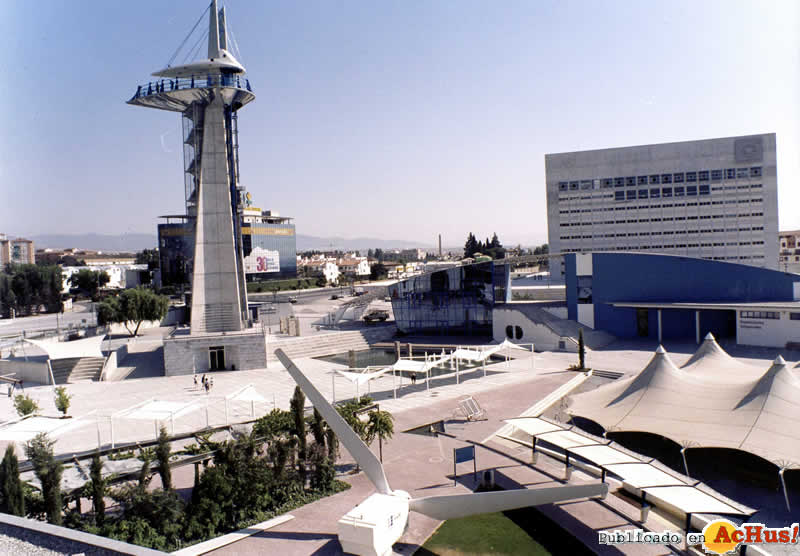
SCIENCE PARK (PERCEPTION)
|  What appears is not always what it is, and what is not always what it seems, the perception creates our own reality. What appears is not always what it is, and what is not always what it seems, the perception creates our own reality.  |
Rob McBride
The Hall Collection of the Science Park including optical paradoxes we see. We looked for a way of example: Before our conscience send information from the senses, the brain processes it using the experience stored about certain visual cues. We are used, for example, to interpret a set of converging lines as lines parallel perspective views. We also know that a figure walked away, apparently decreasing in size.
What is the conclusion we reached our brain when you see the picture on the left? As the three men are of different sizes, the largest being the most remote is.
Just take a ruler to see that, with respect to the drawing, this is not true. Or remove the lines, which is achieved by placing the cursor over it. If you click, get an extension.
"We are fooling our brain brain? No. Just being established hypothesis. In fact, like so many other optical illusions , when we realize that the three figures are the same, our brains tend to offer the two alternatives ... alternately.
seems that children tend to see the three figures equal because of their less training in the interpretation of drawings as representations of reality.


Art & Illusion, p.237.
Explain what aspects you like to see in this room.